

Wound Healing and Immune System Modulation
Skin injuries pose a significant burden on healthcare systems and economies worldwide.
It is estimated that approximately one billion people suffer from acute or chronic wounds.
This results in substantial financial losses in healthcare spending.
In developed countries, the cost of treating chronic wounds accounts for 3% of the total healthcare budget.
For example, in the US, the annual economic burden of chronic wounds is estimated at approximately $50 billion.
Acute and Chronic Wounds: Key Differences
Skin wounds are classified as acute and chronic.
Acute wounds generally result in a rapid healing process where structural integrity is restored.
In contrast, chronic wounds do not heal for a long time; they are characterized by pathological processes such as persistent inflammation, persistent infections, and necrosis.
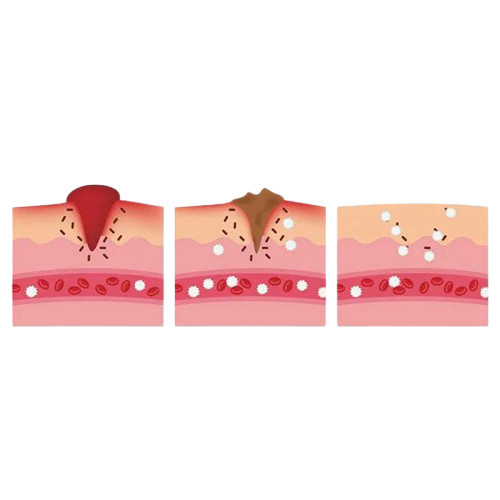
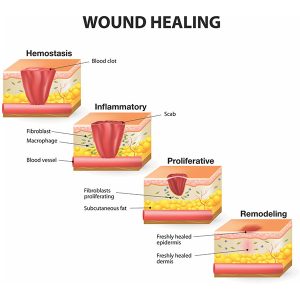
Four Phases of Acute Wound Healing
- Hemostasis Phase: Prevents blood loss by stopping bleeding.
- Inflammation Phase: Immune response that destroys pathogens and prepares tissue for repair.
- Proliferative Phase: Granulation tissue, neovascularization and re-epithelialization process.
- Remodeling Phase: Formation of scar tissue and ensuring tissue integrity.
The Role of Immune Cells
While neutrophils and basophils provide the initial response during wound healing, cells such as macrophages, mast cells, Langerhans cells, and T and B lymphocytes play a crucial role in regulating the process. The coordinated work of these cells is critical for controlling inflammation and repairing tissue.
Immune Imbalance in Chronic Wounds
In chronic wounds, the inflammation phase cannot be resolved and the healing process stalls.
In this case, pro-inflammatory macrophages are present in excessive amounts, while cells with an anti-inflammatory phenotype are scarce.
Furthermore, insufficient clearance of dead neutrophils leads to the accumulation of inflammatory mediators such as TNF-α and IL-1β.
Biofilm and Chronic Infection Problem
In chronic wounds, bacterial biofilms cause continuous activation of the immune system. Biofilms lead to an increase in enzymes such as MMP-2 and MMP-9, causing disruption of the extracellular matrix (ECM). This prevents tissue regeneration and prolongs the healing process.
Challenges in Biofilm Control
- Low penetration of antimicrobial agents into biofilm
- Presence of multiple microbial species
- Rapid development of antibiotic resistance
- Interaction of biofilm with the immune system
New Treatment Approaches for Chronic Wounds
In the treatment of chronic wounds, the aim is to control persistent inflammation. Current approaches are examined under three main headings:
1. Biological Agents
Bioactive molecules stimulate neovascularization and re-epithelialization, thus accelerating wound tissue repair. These agents can be combined with biomaterials to achieve controlled release and a longer duration of action.
2. Biomaterial Strategies
Biomaterials provide both physical protection and controlled drug release at the microscopic level in the wound area. Thus, the wound microenvironment is kept in balance.
3. Cellular Therapies
Bone marrow-derived mesenchymal stem cells,
adipose tissue cells, and epidermal cells are used to support tissue regeneration. These cells accelerate **angiogenesis** and **epithelial remodeling** by releasing growth factors and cytokines.
Immune System Modulation and Wound Healing
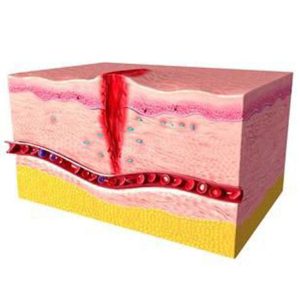
Cellular and molecular therapy strategies aim to balance the immune system’s function during the wound healing process. Immunomodulation promotes tissue repair by suppressing excessive inflammation. These approaches are showing promising results, particularly in chronic cases such as diabetic ulcers and surgical wounds.
Conclusion
Successful treatment of skin wounds depends on the correct management of the immune response.
The combination of cellular therapy, biomaterial technologies, and immunomodulation strategies is opening new horizons for rapid, lasting, and scar-free wound healing.
DNAPHARMED aims to contribute to human health through innovative research in this field.